

 Do you struggle with wasting time and need a tool to help you focus your attention? The Pomodoro technique, developed by Francesco Cirillo in the 1980’s, is been used by me and millions of others. Let me quote from his book, The Pomodoro Technique. “Every day I went to school, attended classes, studied and went back home… feeling that I didn’t really know what I’d been doing, that I’d been wasting my time…. It was clear to me that the high number of distractions and interruptions and the low level of concentration and motivation were at the root of the confusion I was feeling. So I made a bet with myself, as helpful as it was humiliating: Can you study – really study for 10 minutes?” Does that sound familiar? Do you have problems keeping focus? Even if you are reading, do you ever find that you’ve been reading but you stopped thinking about the reading several pages earlier?
Franceso’s Plan
So here is what Francesco did. He went to his kitchen and grabbed his tomato shaped timer (this is the link to the one I purchased). By the way, the Italian word for tomato is pomodoro. He then forced himself to study in concentrated bursts, with small breaks in-between each study segement.
Recommended Approach
First, decide what task you are going to work on. Second, set a timer for 25 minutes. Third, start the timer and continue working on your task until the timer goes off. Fourth, stop when the timer rings, place an X on a piece of paper, and take a 5-minute break. Fifth, after the break, go back to the second step and do another pomodoro. A pomodoro is each uninterrupted 25-minute session, so if something breaks the 25 minute session you don’t mark that down as a completed pomodoro—your good intentions don’t matter. Finally, when you have four X’s on your piece of paper, take a longer break: 15 to 30 minutes. For those of you that are already studying for long periods of time, you may find that this method helps you with mental exhaustion. Also, it will help you with knowledge retention. Our brains need breaks to process what we have just learned, so you may learn more by taking mini-breaks rather than longer breaks every few hours. In other words, this technique may allow you to study more efficiently.
 Kitchen Timer
With regards to the timer, Francesco recommends a manual kitchen timer, a piece of paper, and a pen or pencil. He believes that taking the timer and winding it creates a psychological decision on your part to complete the task. From a behavioral perspective, you now associate setting the timer and working till the timer goes off, which strengthens your commitment to completing the task. The key is to not give up right away. You should notice a difference within a few days, and mastery of the pomodoro technique anywhere from a week to three weeks of use.
My Experience
As I was preparing this episode I decided to search for pomodoro apps. Sure enough there are several, so I downloaded a free one called Focus Keeper Free. It makes a ticking sound, just like a manual kitchen timer. It has a digital countdown and an analog rotating scale like a kitchen timer. At first I thought the clicking sound would be disturbing, but the sound was actually soothing. Ironically, I usually have long periods of time without interruptions, but during my first 25 segment I got a phone call and my wife came in to talk to me. This means I can’t count that segment as a pomodoro. The app also has a five minute timer that comes on for break time. After a few weeks, I decided to purchase an analog kitchen timer. I like the physicality better, and it also allows me to move my phone away from me (one of my main distractions).  As with any time management technique, the pomodoro technique may or may not work for you. Some people swear by it and others despise it. All I can do is suggest that you try it for a few weeks and see if it works for you. For example, do some practice essays using the IRAC method. If you’ve got a kitchen timer start with that, but if not, try it with a free time management app for a couple of days.






 Tip #1
 Tip #10
 Tip 5
Tip 5
 Let’s move on to some tips you can use to survive the cold call.

 In 1885, German psychologist Julius Ebbinghaus published his work called “On Memory.” For the first time in history, he quantified how quickly we forget by charting the “forgetting curve.” The most drastic forgetting occurs within the first hour and then begins to level off after one day. The good news is that you can benefit from Ebbinghaus’ breakthrough study. Given the rapid decline in our memory, the optimal time to review information is within the first 24 hours of first learning it. If you review your notes within 24 hours after class, you will make a stronger mental connection to that knowledge. This will help keep it in your memory longer. By repeating this process, not only will you retain the knowledge for the final, but also for the bar exam. For additional interesting information on how memory works, here is an article on
 If you are preparing to take the bar exam, the bar prep companies do a decent job in providing you with the black letter law. They do this by distilling the law found in hornbooks into something more manageable. But the law doesn’t always have a clear majority rule amongst the states. In that case, you are unlikely to find those rules on the uniform portions of the bar exam. For a few tips on what not to do more bar exam tips, check out this video on
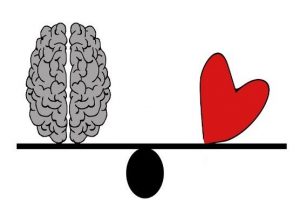
 In order for man to succeed in life, God provided him with two means, education and physical activity. Not separately, one for the soul and the other for the body, but for the two together. With these two means, man can attain perfection.
 So what can you do to achieve some of these results? First, you need to get your heart rate up to 80-90% of its potential based on your age group. You can check this