
Categories
law school academic success Personality Skills

How Curiosity Plays a Crucial Role in Learning

Learning and curiosity have a deep relationship, and in fact, interest complements knowledge. We learn to the best of our ability when we are curious to know about vivid things. If you are not eager to know about something and various aspects of your subjects, your learning may remain incomplete. Besides, most of the most significant discoveries and innovations of the world started with curiosity. Those who could make a real difference to the world were keen to unlock new verticals of learning. So, it would not be wrong if we say that curiosity is the first step towards efficient understanding

A mountain, which is a metaphor for motivation.

To substantiate, there is a research-based study that affirms the vitality of keenness in the process of learning. According to this study, curiosity in students is as imperative as intellect in ascertaining their performance in their academics. Also, according to research in neurology, eagerness makes our minds more receptive to learning. When we are curious to learn, our brains tend to enjoy the process of learning and holistically grasp knowledge. Imagine if there was no curiosity in Albert Einstein, physics could have remained deprived of some crucial findings. If the Wright brothers were not keen enough, who knows if aeroplanes could have been a reality or not. 

Needless to say, if you look at learning as an objective or a destination, curiosity is the journey to it. Would you be able to learn something you are not passionate about or are not interested in? You may be able to cram things for the sake of doing well in the exams and may even achieve good grades. But what about learning? This is perhaps the biggest problem with the prevalent education systems. The education systems are killing curiosity in students and learners to make them adapt to a method of continuous assessments or exams. However, learning and actual development in students is taking a back seat in this new trend. This blog talks about the various aspects of curiosity and how it supplements learning by playing a pivotal role in it. Next, let us analyse the different ways in which interest is essential for learning. On the other side of it, you can realise the importance of being curious while learning. The magic of curiosity can do wonders to make you passionate about the learning process. 

5 Reasons why curiosity is vital for learning

1. It promotes active learning

Curiosity makes your mind much more robust and more open to learning new information. Curious students often ask questions during lectures and are keen to find the right answers. So, their mind is always receptive to learning and is active to grasp as much information as possible. Besides, they are keen to go beyond textbook knowledge and look to apply relevant experience in their day to day activities. Not only such students excel in their academics but also outshine others in terms of knowledge. In current times of cut-throat competition, holistic development is critical for students to achieve success. Therefore, in your pursuit of this comprehensive development, active learning can play a crucial role. Moreover, active learning is an essential prerequisite for some fields of study like engineering, law, and so on.

2. It attracts new ideas and observations.

Students who are eager to learn are often observant of new ideas. They have a knack for the exploration of various fundamentals of the education of the world. Besides, they try to create relevance with new ideas and discover ways to incorporate them into their pursuit of self-improvement. Curious students are committed to enhancing their knowledge by learning new things almost every day. However, students who do not have this eagerness only look at education as a system of exams or assessments. Can you relate to it? With curiosity, you can unlock new doors of success and skills for your personal growth. It can also build in you the sufficient ability to innovate and improvise in different areas of life. In its absence, you are often dishonest to your education and take it as a burden. You need the right motivation to keep pushing yourself to do well and excel. Thus,  We can now affirm that curiosity can be a vital cog in your study motivation.

3. It rewards learning

Curiosity also has the prowess to make learning more rewarding for students. Curiosity prepares the brain for learning and makes learning a joyful experience. Based on this experience, students find subsequent learning pleasing and rewarding. Besides, they can see education as making a real difference in their life and their personality. This is another reason why you should look to develop curiosity in yourself to make your learning wholesome. If you are not keen on learning something, it becomes a mere formality. So, curiosity can make you fall in love with knowledge and rediscover your perspectives. If you are eager to learn, you will always associate learning with pleasure.

4. It unfurls new possibilities.

All the successful science experiments started with a curious idea. As they became successful, they opened a world of new possibilities for human civilisation. So, there is a lot of power that is intrinsic to the idea of curiosity. You can unlock new opportunities and horizons for yourself when you learn with curiosity. Without eagerness, these possibilities may remain latent around you, and you may never see them. But if you are keen to build on your knowledge each day, it can help you to realise or build new skills. Further, these skills can prove to be crucial for you when you start looking for your dream job. Hence, being curious is one of the best ways for self improvement that you can ever discover.

5. It leads to personality development.

Curious students are fond of asking questions and challenging the merit of things. When they ask questions to their teachers on a regular interval, they can capitalise on their communication skills. Besides, in the process of asking questions on behalf of the class, they develop strong leadership skills. So, you can see that with eagerness to learn; you can incorporate a lot of soft skills into your personality. The process of being a curious learner can make you a much more vivid person than you have ever known. This confidence can give you an edge over others when the competition gets down the wire.

To wrap up, it can be concluded that learning is incomplete without curiosity and the willingness to learn. We tend to learn better when something intrigues us and inspires interest in us. Also, eagerness to learn adds a lot more value to the learning process. Learning can be fun when you are curious to grasp knowledge and are excited to discover new ideas. Moreover, there are scientific testaments to the correlation between education and curiosity. Further, In professional courses like medicine or law, curiosity becomes far more essential. Such professions require abundant knowledge and the ability to think beyond the ordinary. Thus, to be a successful lawyer or a doctor, curiosity is almost indispensable. You should continuously look for various ways in which you can encourage interest in yourself. This curiosity can take you places in your career graph and boost the prospects of meeting your career goals.


Categories
Essay Exam Exam Grading law school academic success Torts

Professor Taking Essay Exam

I created a video, watch a professor take an essay exam, where I take a torts bar exam question I’ve never seen before.  Using bar exam conditions, I limited my time to 30 minutes and took it closed book.  This process was useful for me, because it reminded me of the extreme pressure my students encounter on the bar exam and on law school exams.

Useful Exercise

young woman studyingThere are several reasons why students will find this exercise valuable.  One, it helps them understand that even an expert struggles to complete a bar exam in 30 minutes.  Two, they can observe how an expert uses their time to first prepare to write and then write.  I then wrote the exam using the Nested IRAC method, an organization technique to ensure you don’t miss anything.  Three, they can see an expert make mistakes, and still earn a decent grade on the exam.

The second part of this exercise was to grade the exam using a grading rubric used by many state bar examiners.  I first discussed the grading rubric, then reviewed the bar exam grader’s model answer, and finally reviewed my essay.

Comparing Answers

As I compared my answer to the model answer, I was surprised by a few things. For starters, I noticed that the grader was assigning points almost exclusively for duty and breach of duty. Yet the call of the question asked me to “explain” my answer.  I understood this to mean a full negligence discussion.  That required not only duty and breach, but also actual cause, proximate cause, and damages.  To do this for each of the three plaintiffs was impossible on a 30 minute exam–a poor job in designing this exam.  A more focused question by the bar exam designers would have yielded better answers.  Oh well, c’est la vie.

How Many Points?

Another problem with the essay question was the point allocation of 15% for the final issue on the unforeseeable extent of injury (i.e., the eggshell plaintiff rule).  The call of the question appears to give it equal weight with the first question, which was comprised of three parts. Thankfully, I was running out of time when I got to this issue.  Therefore, I did not spend more time on it than was necessary. But I didn’t know that when I was taking the exam.  So the lesson here is to do your best. There really isn’t a way to know exactly what the grader is looking for.  Make sure to discuss all the main issues, and if you have time then discuss minor issues.

The Documents

Here are the documents I used for this exercise:


Categories
Study Technique Time Management

Time Management Using the Pomodoro Technique

Do you struggle with wasting time and need a tool to help you focus your attention?  The Pomodoro technique, developed by Francesco Cirillo in the 1980’s, is been used by me and millions of others. Let me quote from his book, The Pomodoro Technique. “Every day I went to school, attended classes, studied and went back home… feeling that I didn’t really know what I’d been doing, that I’d been wasting my time…. It was clear to me that the high number of distractions and interruptions and the low level of concentration and motivation were at the root of the confusion I was feeling. So I made a bet with myself, as helpful as it was humiliating: Can you study – really study for 10 minutes?” Does that sound familiar? Do you have problems keeping focus? Even if you are reading, do you ever find that you’ve been reading but you stopped thinking about the reading several pages earlier?

Franceso’s Plan

So here is what Francesco did. He went to his kitchen and grabbed his tomato shaped timer (this is the link to the one I purchased).  By the way, the Italian word for tomato is pomodoro. He then forced himself to study in concentrated bursts, with small breaks in-between each study segement.

Recommended Approach

First, decide what task you are going to work on. Second, set a timer for 25 minutes.  Third, start the timer and continue working on your task until the timer goes off.  Fourth, stop when the timer rings, place an X on a piece of paper, and take a 5-minute break.  Fifth, after the break, go back to the second step and do another pomodoro.  A pomodoro is each uninterrupted 25-minute session, so if something breaks the 25 minute session you don’t mark that down as a completed pomodoro—your good intentions don’t matter.  Finally, when you have four X’s on your piece of paper, take a longer break:  15 to 30 minutes. For those of you that are already studying for long periods of time, you may find that this method helps you with mental exhaustion.  Also, it will help you with knowledge retention. Our brains need breaks to process what we have just learned, so you may learn more by taking mini-breaks rather than longer breaks every few hours. In other words, this technique may allow you to study more efficiently.

Kitchen Timer

With regards to the timer, Francesco recommends a manual kitchen timer, a piece of paper, and a pen or pencil. He believes that taking the timer and winding it creates a psychological decision on your part to complete the task. From a behavioral perspective, you now associate setting the timer and working till the timer goes off, which strengthens your commitment to completing the task. The key is to not give up right away. You should notice a difference within a few days, and mastery of the pomodoro technique anywhere from a week to three weeks of use.

My Experience

As I was preparing this episode I decided to search for pomodoro apps. Sure enough there are several, so I downloaded a free one called Focus Keeper Free. It makes a ticking sound, just like a manual kitchen timer.  It has a digital countdown and an analog rotating scale like a kitchen timer. At first I thought the clicking sound would be disturbing, but the sound was actually soothing.  Ironically, I usually have long periods of time without interruptions, but during my first 25 segment I got a phone call and my wife came in to talk to me.  This means I can’t count that segment as a pomodoro.  The app also has a five minute timer that comes on for break time. After a few weeks, I decided to purchase an analog kitchen timer.  I like the physicality better, and it also allows me to move my phone away from me (one of my main distractions). As with any time management technique, the pomodoro technique may or may not work for you. Some people swear by it and others despise it.  All I can do is suggest that you try it for a few weeks and see if it works for you.  For example, do some practice essays using the IRAC method.  If you’ve got a kitchen timer start with that, but if not, try it with a free time management app for a couple of days.



Categories
law school academic success Physical

How the Brain Benefits from Exercise

Recent studies indicate that the brain benefits from exercise. We all know we need to exercise!  And we all know that there are physical health benefits from exercising. But did you know that exercise will help you in the classroom and while studying, as well? While reading Spark: The Revolutionary New Science of Exercise and the Brain, written by Harvard professor John Ratey, M.D., I discovered that modern science is confirming what the ancients understood thousands of years ago. Dr. Ratey begins by quoting from Plato’s Republic:

Plato in bronzeIn order for man to succeed in life, God provided him with two means, education and physical activity. Not separately, one for the soul and the other for the body, but for the two together. With these two means, man can attain perfection.
-Plato, Republic, Book 3, 411e

Dr. Ratey makes the startling claim that exercise has the primary effect of improving brain function, and secondarily, cardio vascular and muscle improvement. In one long-running experiment at an Illinois high school, physical fitness was incorporated into the curriculum. The result was a 17% increase in reading and comprehension. Do you know how many teachers would kill to see that kind of improvement?! At the same high school, students took an international math and science test, in which the Asian countries typically outperform the rest of the world. The students at this American high school came in first place for science and sixth place for math, in the entire world. Not bad for a world-wide competition! This and many other studies demonstrate a strong connection between physical fitness and academic achievement.

Additional Benefits

In addition to academic achievement, studies have found other beneficial results. People who exercise can lower depression, reduce violence, and help increase focus for those with attention disorders. (Researchers in this article state, “Health experts often remark that if exercise came in pill form it would be the most sought-after drug on the market.”) For example, one inner city school that added a physical fitness component to their curriculum saw a significant decrease in fighting. By the way, these studies have been replicated at schools in more financially stable neighborhoods as well as disadvantaged neighborhoods. In other words, regardless of your socio-economic condition or current class standing, you should see an improvement in your academic results by incorporating exercise into your routine.

What You Can Do

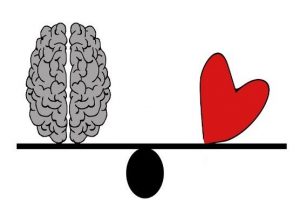
Brain and heart on a board, showing how exercise benefits the brainSo what can you do to achieve some of these results? First, you need to get your heart rate up to 80-90% of its potential based on your age group. You can check this heart rate calculator to help you determine what is right for you, keeping in mind that you should discuss this with your doctor before embarking on a new physical exercise routine.

Second, doing exercise in the morning has a positive effect on your learning all day long.

Third, for maximum effect, work on your most difficult material right after you exercise. Time is of the essence here, so bring something with you and read it before you shower. The longer you wait after exercising to study, the less effective it will be.

Fourth, more complex exercise provides even more benefits than something like running. I suppose if you can find someone to do ballroom dancing with in the morning, that would be the most effective. Though, I’m not sure how many of us want to get up at 6 am to do the salsa or tango!

Finding Time

Now, some of you are thinking, sounds great, but I just don’t have time to exercise. So here’s my question to you: with a potential 20% increase in your scores, do you really have the time to NOT exercise? You will also find that exercise can help break mental roadblocks.

My recommendation is to start easy and at times that work with your schedule. Early morning may not work for you so try afternoon or evening. Going to the gym every day may be ambitious at the beginning, so start with exercising two days a week. The key is just to start and then gradually make it a habit. Also, make sure to study your most challenging material right after your workout for maximum learning. Also, check out this video on how to get through challenging material for even more ideas.


Categories
Essay Exam Exam Grading law school academic success

Law School Exam Myth: Art and Science

[tm_pb_section admin_label=”section”][tm_pb_row admin_label=”row”][tm_pb_column type=”4_4″][tm_pb_text admin_label=”Text”]

So you get back your first law school exam and you did not do as well as you were hoping. You go to the professor and ask what you could do to improve on the final exam. At some point during your meeting with the professor, he or she says that exam writing is part art and part science. Even I used to say garbage like that when I was a new professor. What the professor is really telling you is that you really can’t improve and there is really nothing that he or she can do to help you. You’re either born with this art or you are not. If it is innate, then, unless you are born with it, you are doomed!

But if this is a skill that you can learn, then you can improve your performance on a law school exam.

You Are Different

Students come to law school with different skills and abilities. Some have had lots of experience writing technical essays and others just have not. Those with strong technical writing skills do better than those without that experience. And this is not art! I have read thousands of law school exams and what I’ve seen is students at various stages in their writing career. I can count on one hand the number of times I have seen great writers during the first semester of law school. And only once have I seen a student who had writing skills that surpassed my own. Since his name was also Beau, I jokingly surmise that there must be something about the name.

So why would a professor tell you that law is part art and part science if it isn’t true? One reason is that it just sounds true, at least until you are challenged by someone else. That’s what happened to me. I gave the whole “its part science, part art” argument to a senior professor with a  Ph.D. in Educational Psychology. He helped me to understand that higher level writing skills are based on an amalgamation of lower level skills. What that means, in the context of essay writing, is that there are many skills that we lump together and conclude that someone is either a strong writer or a weak writer.

Example

The word spelling the chalk board.

Law school exam essay writing is made up of different components: the ability to organize thoughts, writing in paragraph form, using correct spelling, following English grammar, organizing sentences in paragraph form, use of topic sentences, and so on. Once you realize that there is no dark art, some hidden path for the select few, you can begin figuring out how to improve.

Depending on where you start your journey, you may have more or fewer skills you need to learn to catch up with the top writers in your class. But make no mistake, someone that started essay writing in high school has an advantage, just not an insurmountable one.

Continuous Improvement

The key is continuous improvement. To this day, my writing keeps improving. Recently I was writing in a forum and someone compared my writing to Faulkner. I was certainly flattered by the comment but I recognize he would not have made that comment even ten years ago.

Becoming a better writer takes determination. You need to first diagnose where you are and then work on developing those lower level skills. Once you’ve mastered those skills, then you start working on higher skills, and higher skills. The key is to keep practicing until you improve. (Check out these apps to work on your writing skills.)

The biggest mistake I see when grading law school exams is students failing to distinguish between issues. All issues and sub-issues are lumped together, without using the IRAC method. All that accomplishes is a poorly written law school exam. Before your next exam complete some practice exams–you can get some at my exam bank .

Once you realize that you don’t have to have been born a skilled writer, and have implemented your new skills on the final exam, check out my mini series on steps to take after completing the final exam.

Advanced Law School Tip

If you are ready to take your exams to the next level, you need to write your exams using the Nested IRAC method. This approach to writing law school essay exams is what usually distinguishes the top students. Practice using the method a few times, that way it becomes second nature. Also, organize your notes by creating a pre-written essay outline, which will save you time on the exam.

[/tm_pb_text][/tm_pb_column][/tm_pb_row][tm_pb_row admin_label=”Row” global_module=”4666″ make_fullwidth=”off” use_custom_width=”off” use_grid_padding=”on” width_unit=”on” padding_mobile=”off” background_color=”#f2f2f2″ allow_player_pause=”off” parallax=”off” parallax_method=”off” make_equal=”on” parallax_1=”off” parallax_method_1=”off” vertical_alligment_1=”center” responsive_laptop_1=”inherit” responsive_tablet_1=”inherit” responsive_phone_1=”inherit” order_laptop_1=”1″ order_tablet_1=”1″ order_phone_1=”1″ parallax_2=”off” parallax_method_2=”off” vertical_alligment_2=”center” responsive_laptop_2=”inherit” responsive_tablet_2=”inherit” responsive_phone_2=”inherit” order_laptop_2=”2″ order_tablet_2=”2″ order_phone_2=”2″ column_padding_mobile=”on” padding_top_1=”20px” padding_right_1=”20px” padding_bottom_1=”20px” padding_left_1=”20px” custom_margin=”40px||40px|”][tm_pb_column type=”2_3″][tm_pb_text global_parent=”4666″ admin_label=”Blog Post Newsletter Sign Up” text_orientation=”left” use_border_color=”off” border_color=”#ffffff” border_style=”solid” text_font_size=”18″]

Sign up for our Newsletter and Receive a Free MP3 Law School Study Aid!

[/tm_pb_text][/tm_pb_column][tm_pb_column type=”1_3″][tm_pb_button global_parent=”4666″ admin_label=”Button” button_url=”http://eepurl.com/cBOaBv” url_new_window=”off” button_text=”NEWSLETTER SIGNUP” button_alignment=”left” custom_button=”on” button_letter_spacing=”0″ button_use_icon=”default” button_icon_placement=”right” button_on_hover=”on” button_letter_spacing_hover=”0″ button_text_size=”14″ button_border_width=”0″]

[/tm_pb_button][/tm_pb_column][/tm_pb_row][tm_pb_row admin_label=”Row” global_module=”4672″ make_fullwidth=”off” use_custom_width=”off” use_grid_padding=”on” width_unit=”on” padding_mobile=”off” allow_player_pause=”off” parallax=”off” parallax_method=”off” make_equal=”off” parallax_1=”off” parallax_method_1=”off” vertical_alligment_1=”start” responsive_laptop_1=”inherit” responsive_tablet_1=”inherit” responsive_phone_1=”inherit” order_laptop_1=”1″ order_tablet_1=”1″ order_phone_1=”1″ column_padding_mobile=”on”][tm_pb_column type=”4_4″][tm_pb_text global_parent=”4672″ admin_label=”Blog Post Video” text_orientation=”left” use_border_color=”off” border_color=”#ffffff” border_style=”solid”]

[/tm_pb_text][/tm_pb_column][/tm_pb_row][/tm_pb_section]

Categories
Exam Preparation law school academic success Study Technique

When to Use Law School Study Aids

Have you wondered when to use law school study aids? Perhaps you have heard some 2Ls or 3Ls talk about certain study aids that helped them get an A in a class. Maybe one of your friends bought one of those 3L’s study outlines. If you are considering using a commercial study aid, please read this first to learn how to effectively use these study aids.

Commercial Law School Study Aids

A commercial study aid is anything other than what you created. This can be outlines, hornbooks, treatises, notes from a prior year, case briefs, audio, video, anything that you did not create is what I include in the concept of a commercial study aid.

In my first week of law school, my professors told me to never ever use law school study aids. I now understand why they gave their students that advice. This was because most students use study aids that hurt their chances for success. For example, study aids used the wrong way will create a false sense a mastery that results in lower grades. I’m not telling you that you will fail law school. But you may remain a B or C student when you could be an A student.

Canned Case Briefs

The one study aid that you should never use is the case brief. A case brief is when someone else has read the case and provided you with the relevant facts, issue, and rule of law. Since this is the one study aid that I am telling you to avoid, let me tell you why. The sole purpose for reading cases is class preparation. So in all likelihood, your professor will cover the case in class. It is okay to go to class not fully understanding every case you read as long as you truly worked through it and tried to understand it before class. If you want to learn more about this, check out my video on how to brief a case.

Most students believe they have to go into class as experts or their professor will destroy them. That may have been true years ago but today, the vast majority of professors will work with students if they are struggling with understanding a case as opposed to not having read the case at all. It is through struggling through the law that you learn, not by reading someone else’s notes. (For more information, watch my video on how law school professors operate).

Available Law School Study Aids

Now let’s look at all the resources that provide the black letter law. These resources include hornbooks, treatises, outlines, audio, and video. My recommendation is that you use these resources to help you understand the law. For most students, you should probably read one of these resources first and then read your assigned cases. That way the case will make more sense to you. After all, you learn the law better if you read a case in its legal context.

Audio resources in particular can be used very effectively. For example, you have to get to school, that means you either walked there or drove there, taking some time to get to class. Don’t waste that time! Use your time effectively. Audio can be a great way to use that down time rather than listening to the radio or something else as you’re driving into school.

How to Use Commercial Outlines

Note paper with an A plus grade. Use law school study aids to get an A.

Finally, let’s discuss commercial outlines. DO NOT USE someone else’s outline, whether purchased or not, without making your own law school outline first. You are going to learn a whole lot more if you condense your notes and turn them into your own outline instead of relying on someone else’s thought process. Now, you did not hear me say to not use someone else’s outline, period. What I tell you is to struggle and make your own outline first. Once you have put your best time and effort into creating your own outline, and you are convinced that you have the best outline possible, then look at someone else’s outline to see what they have done. Then you can make changes to your own outline. Certainly you are going to miss things but you do not want to look at someone else’s outline first and then not do the hard work because then you don’t learn and you remain that B or C student.

The primary reason why most people that use law school study aids never reach their full potential is because they never struggle with the law, which is how we learn. Many students become satisfied with their grades, believing that they can’t do better because they just didn’t understand the material, the professor was too hard, or the exam wasn’t fair. While a B student will graduate law school and pass the bar exam, the best jobs and opportunities go to A students.

Categories
Study Technique Time Management

Don’t Give up on Difficult Reading!

Don’t give up on difficult reading! We’ve all been there! It’s 11:00 at night, you’re tired, you have been in classes all day, and now you have 50 pages of reading to get through before tomorrow. You find yourself struggling with understanding concepts within the material. Most law students, especially new law students, struggle with law school textbooks.

To be honest, a lot of lawyers sometimes struggle to get through wordy legal documents. This is why they employ associates and paralegals to do that kind of tedious work. But in law school, you can’t exactly hire someone to do your reading for you. This would be ineffective and a violation of a school’s honor code!

Dale Corson Method

So, what do you do? Dale Corson, the eighth president of Cornell University, developed a technique to help students not only get through difficult reading, but to also understand it. When you are having a hard time with a reading assignment, mark each paragraph that you don’t understand with a small “s” which stands for “struggling.” Many times, the next paragraph or two will help to clarify what you did not understand in a previous paragraph. However, if this is not the case, and you have a page or two of “s” paragraphs, you must first struggle to understand it on your own. This is vital! (For more information on pushing through when you just want to give up, watch my video on grit and motivation).  Once you reach your breaking point of truly not being able to understand the material without help, follow these steps.

First

First, get paper, a pencil, and a timer. Set the timer for 15 minutes. During that 15 minutes, give it everything you’ve got to try to understand the material. This may seem like a pointless exercise because you have already hit that mental block where you feel like you just can’t get it. But there is a good reason to do this. You have given yourself permission to stop working on the problem at a definite time.

A stop watch.

The fifteen minutes you set on the timer acts as a trigger to your brain to relax and often this will be enough for you to be able to figure it out.

Second

Second, during those fifteen minutes, go back to the first “s” that you marked in the material. Write down everything that you do not understand. What is it precisely that does not make sense? If you figure it out while you are writing these notes, great! But if after this exercise, something still does not make sense, then take it to your professor, private tutor, or study partner. You will have fifteen minutes worth of detailed notes to go over with that person. (Just as an aside, writing your notes, as opposed to typing them on a laptop, will vastly improve your note-taking abilities. See another episode of mine titled Handwrite or Type Notes

Many professors will have more sympathy for the student who has struggled with the difficult reading, over the student that just shows up at the professor’s office to ask him or her to explain a concept covered in class. Additionally, the student that uses this method will be in a much better position to understand the material because they worked so hard to understand it on their own before seeking help from anyone else. Finally, if you aren’t getting the help you need from your professor, you can always reach out to one of our tutors.